How to Start Day Trading From Scratch With a Small Account and a Simple Futures Strategy
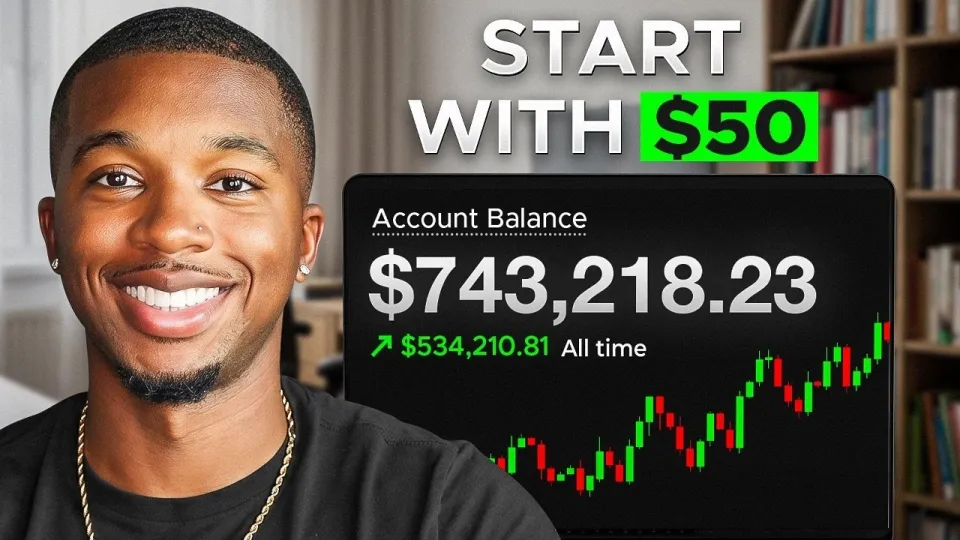
You can order the same kind of articles for your own video to boost it on YouTube and Google. Just message the Telegram bot @sat_sit_bot. Articles with your video embedded are written and posted by the bot itself — on popular topical sites (no ads). Your first 50 articles are free.
· based on the channel Jooviers Gems
The easiest way to start day trading from scratch is to pick one market, learn to read a candlestick chart, trade a single repeatable setup on a demo account, and only then move to live money — or to a funded account where the firm carries the capital risk. Everything else, from indicator stacking to signal groups, is noise that delays the first honest trade. A structured walkthrough of that path, plus the trade ideas behind it, is available through the Gemify Inner Circle, where the full trade list is shared.
Most beginners fail not because day trading is impossible, but because they start in the middle: they buy a course, open five charts, and risk real money before they can explain what a single candle means. The order below is the order that works.
What day trading actually is and what it is not
Day trading means opening and closing positions inside the same session, so no overnight gap risk is carried and no position is held through earnings or weekend news. It is not investing, it is not a passive income stream, and it is not a shortcut around learning a skill. The realistic version looks like this:
- You choose one liquid market — an index futures contract such as the micro S&P 500 or Nasdaq, a major forex pair, or a large-cap stock with heavy volume.
- You trade one session, usually the first one to three hours after the US open, when volume and range are highest.
- You take one to three trades and stop, win or lose, when your daily loss limit is hit.
- You record every trade in a journal with entry, exit, size and the reason for the decision.
That is the whole job. The complexity people associate with trading comes from tools, not from the work itself.
Reading a candlestick before reading anything else
A candlestick is a four-number summary of a period of time: open, high, low and close. The body shows the distance between open and close; the thin wicks show the extremes reached inside that period. A long body closing near its high means buyers controlled the period; a long upper wick means sellers rejected higher prices before the close.
Beginners should spend a week doing nothing but marking candles on a chart and describing them out loud: who won this candle, buyers or sellers, and where did the rejection happen. This single habit builds the chart literacy that every later strategy depends on. Traders who skip it end up memorising patterns without understanding what price is doing.
The simple beginner setup worth practising
A repeatable setup beats a clever one, because a beginner needs something that can be tested hundreds of times. One workable structure is the failed breakout, also called a sweep and reversal:
- Mark the high and low of the first 30 to 60 minutes of the session — the opening range.
- Wait for price to push above the range high or below the range low and then fail to hold there.
- Enter on the close back inside the range, in the direction of the reversal.
- Place the stop beyond the extreme of the failed push, and target the opposite side of the range or the session's volume-weighted average price.
This setup gives a defined invalidation point, which is what makes position sizing possible. If the stop is far away, the position is small; if the stop is close, the position can be larger. The setup does not need to win most of the time — it needs a positive expectancy after costs, which is why the journal matters more than the pattern.
Risk rules that keep a small account alive
Risk control is the part of day trading that decides whether a beginner survives long enough to improve. Concrete rules that hold up:
- Risk 1% of the account per trade while learning; 2% is the ceiling once results are consistent.
- Set a hard daily stop, typically 2% to 3% of the account, and close the platform when it is hit.
- Cap the number of trades per session at three, so a bad morning cannot become a bad month.
- Never widen a stop. A stop is a decision made before the trade, not a suggestion during it.
- Track the maximum drawdown, not just the win rate. A 60% win rate with huge losers still loses money.
On a small account this discipline is what makes growth possible, because the percentage rules scale with the balance rather than depending on the size of the starting deposit.
Trading someone else's capital instead of your own
Prop firm evaluations and funded accounts are the most practical route for a beginner who does not have five figures to risk. The model is straightforward: you pay a one-time evaluation fee, trade a simulated account under a profit target and a drawdown limit, and if you pass, you trade the firm's capital and keep a share of the profits. The Edge Funder operates on this model and is the funding route referenced alongside the video: https://www.theedgefunder.com/
Two rules matter more than the profit target. First, the daily loss limit — breaching it usually ends the evaluation immediately, regardless of overall profit. Second, consistency rules, which in many firms mean no single day can account for an outsized share of total gains. Read the rulebook before the first trade, not after the first breach. There is also an active community around funded trading at https://discord.gg/WpJXHKK7f2, useful for comparing rule sets between firms.
Backtesting, journaling and the first month of real screen time
Backtesting is replaying a setup on historical charts and recording the outcome of each occurrence, and it is the cheapest education available. A practical first month looks like this:
- Week one: chart literacy — describe 100 candles and mark 20 opening ranges.
- Week two: backtest the failed-breakout setup across 50 to 100 historical sessions and log the results.
- Week three: trade the setup on a demo account in real time, same session every day, same size every trade.
- Week four: review the journal, calculate win rate, average win, average loss and expectancy, and only then consider live capital.
A trading journal is not optional. It is the only way to tell whether a losing streak is normal variance or a broken process. Tools built for this purpose, such as Wagmi Trader, exist precisely because spreadsheets stop being enough once trade count grows.
Common beginner questions and doubts, answered
The most frequent hesitation is about money: how much is needed to begin. The honest answer is that the amount matters less than the percentage risked — a smaller account with 1% risk and a tested setup is a better starting point than a large account traded randomly. The second is about speed: beginners expect results in weeks, while the traders who last measure progress in months of consistent process.
Another recurring doubt is comparison. Social media shows outcomes, rarely the losing days that produced them, and a beginner who benchmarks against screenshots will always feel behind. The third doubt is about which market to choose; the practical answer is to pick the one with the tightest spreads and the session that fits your schedule, then stay with it long enough to gather real data instead of switching every week.
Useful links from the breakdown
- Inner Circle, all trades shared: https://www.getgemify.com/innercircleo?el=youtube_organic
- Instant funding to trade with: https://www.theedgefunder.com/
- The Edge Funder community on Discord: https://discord.gg/WpJXHKK7f2
- Instagram: https://www.instagram.com/joovier_
- Recommended forex broker: https://herofx.co/joovier/
The bottom line on starting from scratch
Day trading from scratch is learnable, but only in the right order: candlesticks first, one setup second, risk rules third, and real capital last. A small account traded with 1% risk and a hard daily stop will outlast a large account traded on impulse every time. Funding routes such as prop firm evaluations remove the capital barrier for beginners who can follow rules, and a journal turns screen time into usable data. The breakdown that shaped this article comes from the channel Jooviers Gems, which walks through the beginner path with both the wins and the losing days included. If you want the trade-by-trade version of that process, the Gemify Inner Circle is where the full list lives.
Key takeaways
- Day trading from scratch starts with one instrument, one setup and one risk rule — not with ten indicators.
- Candlestick anatomy (open, high, low, close) is the first thing a beginner must read fluently before risking money.
- Futures micro contracts and prop firm evaluations let a small account trade size without risking thousands of dollars.
- Risk per trade should stay at 1–2% of the account, with a hard daily loss limit that ends the session.
- Backtesting and demo trading for at least a month comes before any live capital is deployed.
Source: Easiest Way To Start Day Trading From Scratch (Exactly What I Did) · Markdown version
Questions & answers
How much money do I need to start day trading from scratch?
You can start learning on a demo account with nothing at all, and many beginners then move to a prop firm evaluation that costs a one-time fee instead of risking personal savings. What matters far more than the starting balance is the percentage risked per trade, which should stay at 1% to 2% of the account. A small account traded with strict rules is a better classroom than a large one traded randomly.
How long does it take before day trading becomes profitable?
Realistically, expect several months of demo trading and backtesting before consistent results appear, and the first month should be spent almost entirely on chart reading and journaling. Traders who measure progress in months of process rather than in weekly profit tend to last longer. Comparing your early results with social media screenshots is the fastest way to quit too soon.
Which market is best for a beginner, futures, forex or stocks?
Pick one market with high liquidity and a session that fits your daily schedule, then stay with it long enough to gather meaningful data. Micro index futures and major forex pairs are popular because spreads are tight and position sizes can be very small. Switching instruments every week resets your learning curve and makes backtesting useless.
What is a funded account and is it worth it for a beginner?
A funded account, or prop firm evaluation, lets you trade the firm's capital after passing a profit target while respecting a daily loss limit and a maximum drawdown. It is worth considering once you have a tested setup and a journal showing consistent execution, because the fee is far smaller than the capital you would otherwise risk. Read the rulebook carefully first, since breaching a daily loss limit usually ends the evaluation immediately.